The Omada journal · Local guide
Three Utah Valley Cities I Love, and the Neighborhoods I’d Start With
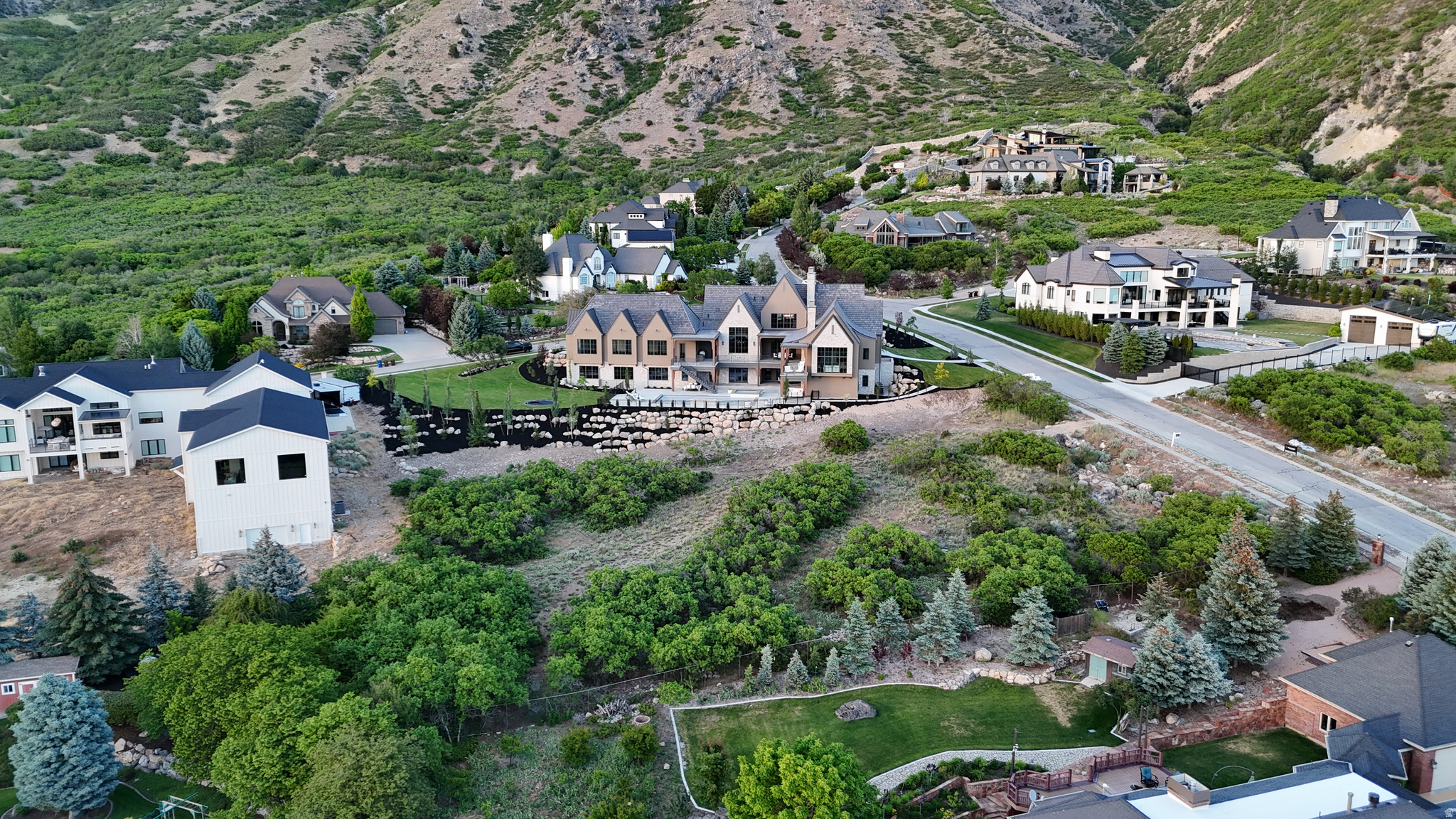
If you asked me where I’d look for a home in Utah Valley right now, Mapleton would be my first answer. After that, I’d want to know more about you.
What’s your budget? Where do you work? Do you want space between you and your neighbors, or would you rather have restaurants and shopping nearby? Would you enjoy updating an older home, or does the thought of a renovation make you tired?
I grew up in Highland, spent a lot of time mountain biking above Alpine, and now work with buyers and sellers throughout the valley. I love the outdoor access here. Rock climbing, hiking, snowboarding, and having mountains outside your window are hard to beat.
I’m less enthusiastic about how crowded it’s becoming. Some days, it feels like every remaining parcel has a developer’s name on it. I wish our cities were protecting more green space within the valley. I need a little breathing room for my sanity, and that probably tells you something about my favorite neighborhoods.
These are three cities I love, along with the specific areas I’d start exploring in each.
What should you know about Utah Valley before choosing a city?
Mountains frame the valley, and Utah Lake takes up a large part of its center. Once you learn which mountains you’re looking at, keeping your bearings gets pretty easy.
I-15 is the main route for traveling north and south through the valley, continuing toward Salt Lake City or down toward St. George. But the distance from your house to the freeway matters more than newcomers sometimes expect. A place can look conveniently located on a regional map and still add a substantial drive before you even reach the interstate.
Budget also changes the conversation. In my searches with buyers, the north end of the valley has become increasingly difficult to afford compared with options farther south. That’s part of why Mapleton has my attention.
After price, I usually ask about privacy, shopping and activities, work, and what you like doing outside of work. Those answers help me narrow the search much more than a general request for a “nice neighborhood.”
Why is Mapleton my favorite city right now?
Mapleton has the combination I keep coming back to: open space, beautiful mountain scenery, and properties that still make me stop and look.
It’s gorgeous pressed up against the mountains. And while there’s new development, there are still areas with older homes, larger lots, and room to breathe.
My two picks here offer very different ways to enjoy it.
Older neighborhoods near the northeast foothills
The area around Maple Street and 1200 East is a good place to start. I recently found a property there that I absolutely loved.
If the budget doesn’t stretch to the $1 million to $2 million range, I’d look near the foothills rather than assuming you need to be up on them. There are older homes in those surrounding areas with generous lots and plenty of potential for updates.
Over the last few months, I’ve seen examples around $550,000 on roughly 0.3 to 0.5 acres, including some advertised with ADUs. Those are individual properties I’ve come across, so I wouldn’t treat that as a guaranteed price range or assume the same options will always be available.
But that’s the kind of property that gets my attention: a setting I love, enough land to enjoy, and a home where thoughtful improvements could make a real difference.
Harmony Ridge
Harmony Ridge, near the Spanish Fork border and Spanish Fork Canyon, appeals to me for different reasons.
EDGEhomes is building a mix of homes here, and the incentives I’ve been seeing are worth a serious look. I’ve also been impressed by how some of the homes and townhomes capture the mountain views. For the price point, certain properties feel particularly well positioned.
The advertised community amenities include pickleball, a clubhouse, a gym, and a pool, along with nearby parks and trails. I’d confirm which amenities are open and what your particular HOA includes before buying. Harmony Ridge community details
Another practical benefit is the Walmart Neighborhood Market and small retail center across the street. Being able to handle a grocery run nearby saves you from heading farther into Spanish Fork for every errand.
If you’re drawn to Mapleton but prefer new construction and shared amenities over an older house and a larger yard, this is an area I’d put on your list. Builder incentives change, so we’d check the actual terms when you’re ready to look.
What are Mapleton’s drawbacks?
There are still active farms. Sometimes you smell them. If you love the idea of a rural setting, that’s part of the experience.
The other tradeoff is the freeway drive. Mapleton can work well for getting around the valley, but where you live within the city matters. I’d test your actual commute before deciding the mountain setting is worth the additional time.
What does Provo offer beyond the college-town reputation?
Provo is a college town, especially around BYU. But that description leaves out a lot.
It has some of my favorite restaurants and activities, along with neighborhoods that feel very different from the areas people associate with student housing.
Black Sheep Cafe, Bianca’s La Petite French Bakery, and Backdoor Burger are personal favorites. We’ve also spent plenty of time at Gem Studio and The Collective Underground for activities. Those are the kinds of places that make me enjoy spending time in Provo even when I’m not there for work.
For homes, my two favorite areas are the River Bottoms and Sherwood Hills.
The River Bottoms
The River Bottoms has some of my favorite residential settings in the valley: brick homes, mature trees, private streets, and properties backing onto the Provo River.
Nearby, the Shops at Riverwoods adds dining and shopping to the appeal. The residential area I’m recommending is the River Bottoms, with Riverwoods as one of the nearby conveniences.
If you like established landscaping and substantial homes, this is an area I’d want you to see in person. Listing photos don’t always communicate how much the trees, streets, and river setting contribute to the experience.
Honestly, I have a hard time coming up with a drawback that outweighs the appeal for me. University Avenue can get busy, though, and that’s worth experiencing during the hours you’d normally be driving.
Sherwood Hills
Sherwood Hills is one of my favorite places to look for renovation potential.
It sits up on the bench, and many streets have sweeping valley views. There’s also a mix of older homes and newer or extensively updated properties. That creates opportunities to buy a home that needs work in a setting that’s already desirable.
One example is this home on Imperial Way, which was renovated into a beautiful modern home with broad valley views and brought to market at $3.4 million.
We’ll see what it ultimately sells for. An asking price doesn’t establish a return, but the transformation illustrates why this neighborhood interests me. The opportunity depends on what you pay, what the work costs, and what comparable finished homes actually sell for.
What should buyers watch for in Sherwood Hills?
Some streets have properties with significant settling issues. That deserves serious attention.
I’d want a buyer to understand the specific home’s history, review available reports and disclosures, and get appropriate professional evaluations. The views and renovation possibilities are appealing, but the condition of the property has to support the plan.
Why does Alpine still make my list?
Alpine is expensive. Extremely expensive in some pockets.
It also has a reputation for being a little pretentious. I can understand where that impression comes from when you’re driving past enormous estate homes, but my own connection to Alpine is much more personal.
I grew up mountain biking around Lambert Park. We spent summer evenings getting snow cones at Snoasis and buying candy at Peppermint Place with money we’d saved. Peppermint Place is sadly gone, but those memories are a big part of how I think about the town.
We also spent time around the Junction, the roundabout with the gas station and nearby businesses such as Daylight Donuts. Those everyday places belong in the picture alongside the mansions.
The Box Elder area above Lambert Park
I’m biased here. I’ve sold several properties in the Box Elder area, and I already loved it from years of riding nearby.
The valley views are incredible, and having Box Elder Peak looming above you gives the area a distinctly alpine feel. I’ve spent time in Switzerland, and parts of this setting made me feel right at home.
There are large estate lots and some truly enormous homes. It’s easy to drive through and get a little jealous.
If the budget allows, this is one of the places I’d start for someone who puts mountain scenery, views, and space at the top of the list.
Old Alpine, just east of Main Street
Old Alpine appeals to the part of me that likes finding potential in an established neighborhood.
Older properties with substantial land occasionally come up for sale here. Depending on the property, that might mean updating the existing home or exploring whether a new build makes sense.
The attraction is that you can keep some of the old-town atmosphere. In my experience, this is the kind of neighborhood where people still wave to one another.
As with Sherwood Hills, I’d evaluate each opportunity individually. A great lot and an older home can be a promising combination, but the numbers and the feasibility of your plans still need to work.
What are Alpine’s tradeoffs?
Beyond the price, there’s the drive.
Depending on where you live, getting to the freeway can take around 15 to 20 minutes. That can add up quickly if you commute every day.
For someone who loves the setting and doesn’t mind the additional driving, Alpine can be worth it. If your priority is quick freeway access, I’d want you to experience that drive before committing.
How would I choose among these three cities?
I’d start with what you want your ordinary week to look like.
- Mapleton: My first stop for open space, mountain scenery, and a choice between older properties with land and newer communities.
- Provo: Where I’d look for established neighborhoods, restaurants and activities I personally enjoy, and select renovation opportunities.
- Alpine: A favorite for mountain settings, estate properties, and older pockets with character, provided the budget and commute work.
Then I’d get specific. Drive around Maple Street and 1200 East. Explore the River Bottoms and Sherwood Hills separately. Visit both the Box Elder area and Old Alpine.
You’ll learn more by comparing those settings than by treating each city as one uniform neighborhood.
My favorite place won’t necessarily be yours. But if you tell me what you value, what you can spend, and what tradeoffs you’re willing to make, I can help you find a starting point that makes sense.
Search homes by city, and we’ll narrow the search from there. If you’re selling a home as part of the move, request a home valuation so we can look at both sides together.
Neighborhood notes are local guidance, not a ranking or an appraisal. Conditions, inventory, and commute patterns change. Confirm details on the specific property and street before you decide.